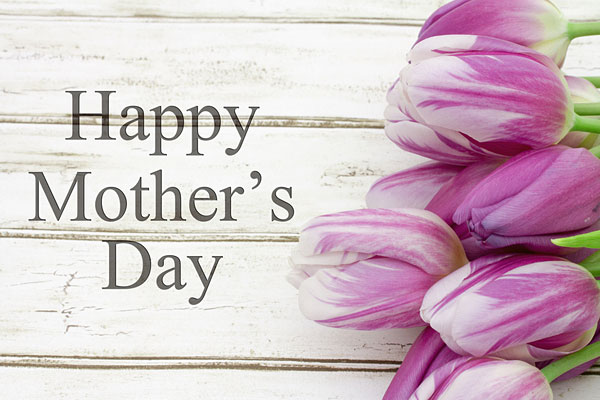
Mothers Day
celebrations appear to have started back with the ancient
Greeks and Romans who held spring festivals to honor the
mother of their gods, Rhea for the Greeks, and Cybele
for the Romans.
Christians
also had a holiday honoring Mary, the mother of Jesus,
that was held the fourth Sunday of Lent. In the 1600's
England expanded this religious holiday to include all
mother's and the day became know as the Mothering Sunday.
In the United
States, Anna Jarvis is the woman primarily responsible
for the campaign that made Mothers Day an official national
holiday. Anna's mother, who died on May 9th, 1905 had
attempted to establish "Mother's Friendship Days"
in the late 19th century to help the country heal after
the civil war.
On May 10th,
1908, 3 years after her mother's death, a special service
honoring mothers both living and deceased was held at
Andrews Methodist Episcopal Church in Philadelphia. Anna
was determined to have Mothers Day recognized as a national
holiday and in 1914 congress passed a resolution proclaiming
the second Sunday in May as Mothers Day.
Anna also is
responsible for another Mothers Day tradition. She sent
thousands of carnations to be given to participating mothers
at the Mothers Day services she started in Philadelphia.
Red carnations were used to honor living mothers, and
white carnations(which were her mother's favorite flower)
were used to honor deceased mothers.
What Our Customers Are Saying:
* It's easy, fast and friendly to buy. Congratulations.
* It is a pleasure to do business with them - I have used them for over 5 years now and I have not had a single complaint.
* Very convenient. I was searching and searching for a last minute delivery and this was it. Thank you!!!!!!!!!!!!!!!!!!!!!!!
Order by Phone 24 / 7:
1-800-541-1857
Help Hours:
8 AM - 5 PM CT Monday-Friday
9 AM - 1 PM CT Saturday
Comments or suggestions?
click here to email us: